
Avia Masters – Play Casino Game for Real Money
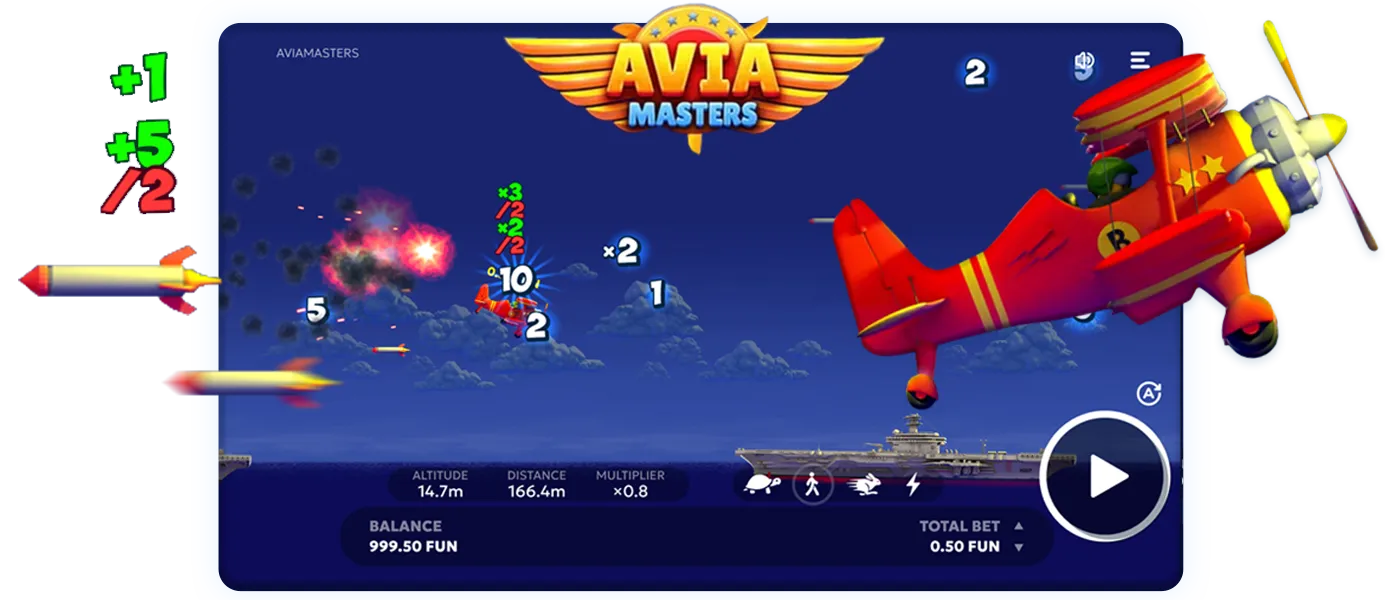
Avia Masters is a crash game that lets players follow the plane’s flight at a preferred speed. You place a bet before the round starts and then watch the plane move across the screen and collect prizes along the way. Instead of reels and paylines, the game relies on in-flight events such as cash prizes, multipliers, and hazards. All rounds have a predetermined outcome, so players do not control the flight or choose a cash-out moment. To win, your final coefficient must be above 1.00x and the plane must land on a carrier. Read about the game’s rules, how to play it, and some tips for managing budget better.
Avia Masters Overview
Aviamasters has a rapid cycle of “bet, flight, finish.” After making a bet at the start of each round, players see the coefficient at x1.0. The flight features random objects that can add to or multiply your wins or cut your current coefficient in half. To win this game, the plane must land on the aircraft carrier, but if it crashes into the ocean, you lose your entire stake. The game gained popularity recently and is present in the libraries of most casinos that feature BGaming.
| Feature | Details |
|---|---|
| Game type | Crash-style game |
| Developer | BGaming |
| Release date | 2024 |
| RTP | 97.00% |
| Volatility | Low |
| Min bet | $0.10 |
| Max bet | $1,000 |
| Max win | x250 |
| Access | Desktop, mobile |
| Demo version | Available |
| Autoplay | Yes |
| Speed modes | 4 |
Understanding Provably Fair Gaming
Provably Fair helps to separate how the game looks from how it actually works. In Avia Masters, the results are decided by this system before the flight even starts. The plane speed, animations, and visual effects do not affect the outcome in any way. They only change how fast you see the action on the screen.
Gamblers can check the game rules, review payout limits, and confirm that the casino offers licensed software. When these basics are clear, you know the game runs on chance alone and follows fixed, verifiable rules.
What is the Avia Master Game
If you describe the Avia Masters slot in one paragraph, it works like this: you set the bet amount, start the round by clicking Play, and watch the plane fly across the screen. Along the way, it can collect cash prizes and multipliers that increase the final payout. It can also hit rockets, which cut the current multiplier in half and make the plane descend faster. If the plane lands safely on the aircraft carrier, you receive the winnings shown at the end of the round. If it falls into the ocean, the stake for that round is lost.
How to Play Avia Master
Before you start, you must understand the basic flow of the Avia Masters casino game. It is simple, so you will need little time to learn the ropes. Here is what you do:
- Choose your stake for the round. Bet values range from 0.10 to 1,000 USD.
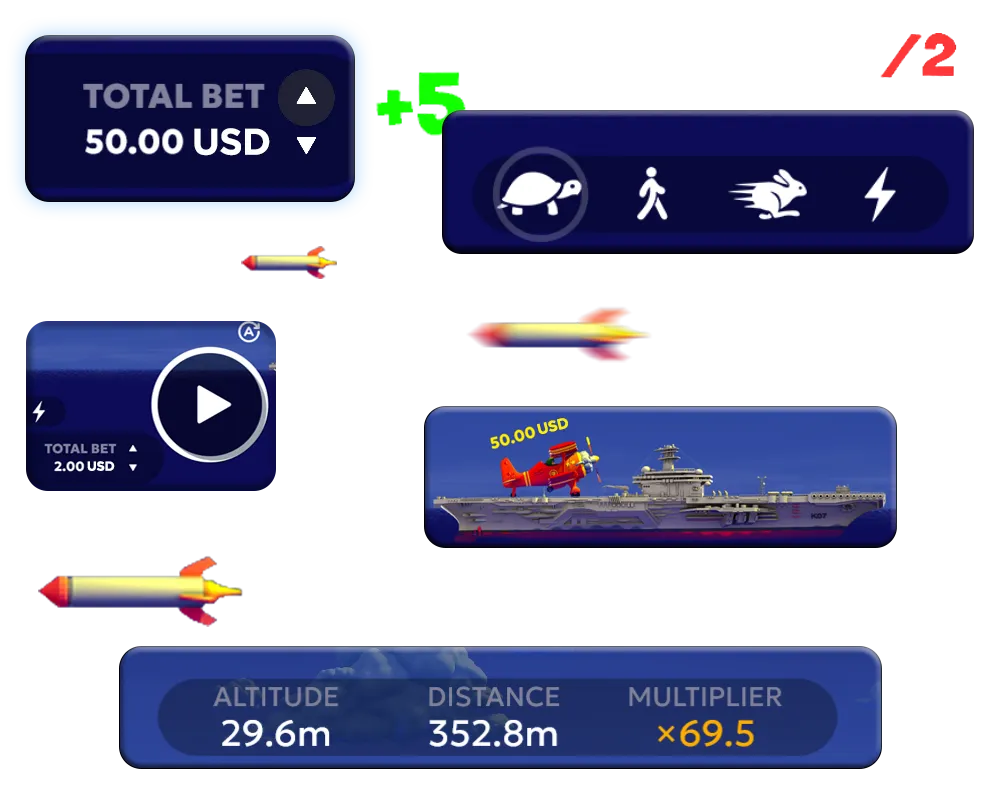
- Select the flight speed that feels comfortable, such as slow, normal, fast, or turbo.
- Press the Play button to start the round.
- Watch the plane fly across the screen as it collects prizes, multipliers, or hits rockets. The round ends when the plane lands on the aircraft carrier or falls into the ocean.
- Enable autoplay if you want the game to run automatically, and set the number of rounds in advance.
Rules and Game Mechanics
The basic algorithm in Aviamasters is the following – the coefficient starts at x1.0, then increases due to objects, the rocket “cuts” the multiplier in half and reduces the altitude. Victory is landing on an aircraft carrier, defeat is falling into the water.
| Symbol | What it does | What it means for the player |
|---|---|---|
| x2, x3, x4, x5 | Increases your multiplier | Can boost the payout fast, especially if the current coefficient is already high |
| +1, +2, +5, +10 | Adds a number of bet values to the coefficient | Smoother growth, more “step-by-step” gains without sharp spikes |
| Rocket | Halves your multiplier and reduces altitude | The most dangerous object – it can break your built-up result quickly |
| Aircraft Carrier | Landing target that applies the final multiplier | “Locks in” the result – without landing, the round isn’t a win |
| Ocean (Water) | Crash zone where the stake is lost | Round loss with no payout |
Special Features
The main practical feature in the Avia Masters plane game is Autoplay. It automatically launches a series of rounds and saves your time and effort, but increases the risk of “not noticing” when the limit has been reached. That is why there are also stop conditions: after any win, after a win above a specified amount, or after the balance increases or decreases by a specified amount.
This is useful because you set the limits in advance and do not “catch the moment” based on your emotions.
Another feature is the speed mode, which lets you choose how fast the plane flies. You can go turtle for a slow pace, human for normal speed, hare for a little accelerated flight, or lightning for a very fast round. The speed does not affect the outcome, but going slower lets you watch the plane collect prizes and multipliers carefully. Meanwhile, going faster is useful if you only care about the results.
RTP & Volatility
The game has a theoretical RTP of 97% and low volatility. However, RTP does not promise 97% back in one evening. It is a long-term indicator that describes the average return of the mechanics. Low volatility means more frequent small outcomes and fewer rare big “hits.” You will see small wins more often than rare big wins.
Avia Masters Theme and Design
The Avia Masters game has a visually pleasing design that makes play simple and enjoyable. The background is a deep blue sky with softly drawn clouds, and all characters and objects are clearly defined. The control panel at the bottom of the screen is slightly transparent, so you can see the flight action behind it. Moreover, the Play button is large and can be adjusted in size and transparency to suit your preference. All current statistics, including bets, multipliers, and winnings, are displayed clearly, so it is pleasant to follow the overall game.
Main Advantages of the Avia Masters Game
Avia Masters is easy to understand and fun to play. The game gives you control while keeping each round exciting.
- Four speed modes let you choose how fast the plane moves. You can go slow to watch each multiplier and prize icon or fast to focus on the results;
- High-quality design shows deep blue skies, clearly drawn clouds, and crisp objects, making the game pleasant to watch;
- Autoplay with stop conditions lets you set limits on rounds, single wins, or balance changes. This helps you stay in control and avoid overplaying;
- Transparent game parameters show RTP 97%, low volatility, bets from €0.10 to €1,000, and a maximum win of x250. Everything is clear and easy to check;
- Clear interface displays all statistics. The Play button can be resized or made transparent, and the control panel stays at the bottom without blocking the view;
- Mobile-friendly layout works well on smartphones and tablets without losing visual quality.
How to Sign Up & Log In at Online Casino
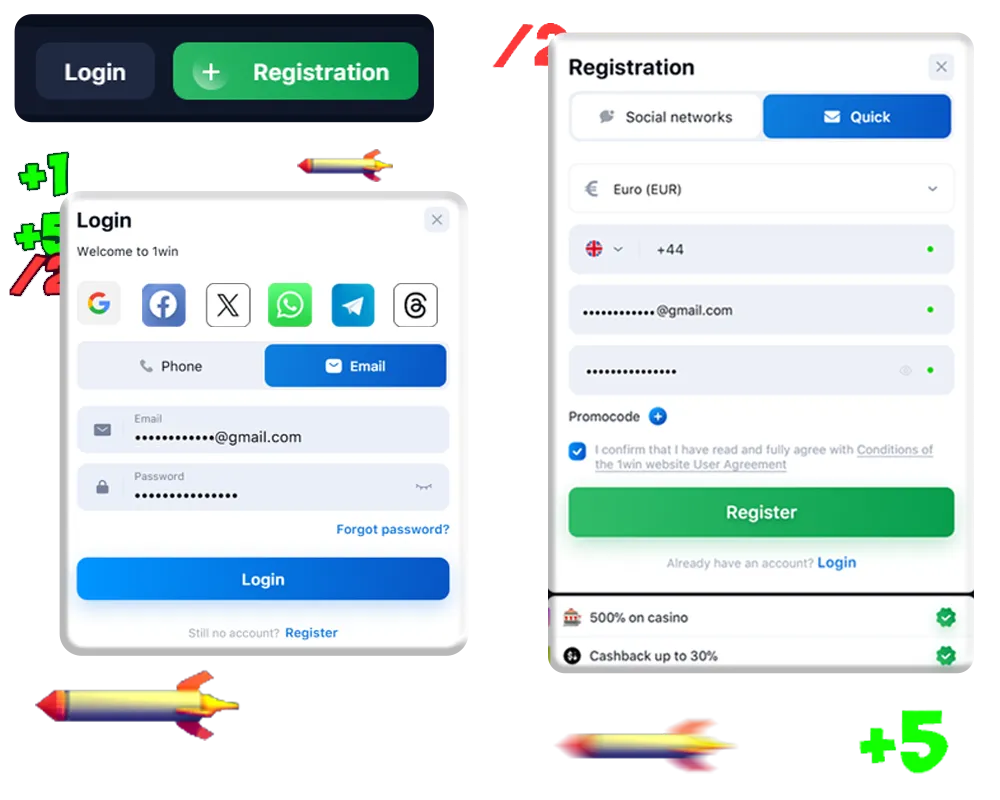
Getting started with Avia Masters requires an account at a casino that offers BGaming’s library. The sign-up is quick and safe if you follow the right steps:
- Choose a licensed Avia Masters casino that has this game in the library.
- Open the gaming website and click the Sign Up button to access the registration form.
- Fill in all required details accurately, including your full name, email, and date of birth.
- Check your email inbox for a confirmation message from the casino.
- Click the confirmation link to verify your account.
Step-by-Step Guide to Logging In
To start playing Avia Masters, you first need to log in to the casino. Follow a few easy steps to access your account and find the game quickly:
- Open the casino website and click Log In.
- Select login by email/ID or phone if the casino has it.
- Enter your details, then confirm your login with a code if requested.
- Use the search function to find a game and launch it.
Secure Your Account
The most reliable way to reduce the risk of data leakage is to enable 2FA, and not store your password in notes. Another basic rule: use a separate password for the casino and for the email associated with your account. If you play on your phone, enable screen lock and don’t give your device to anyone else “for a minute” while you are actively logged in.
How to Deposit and Withdraw Funds
Financial transactions in an Aviamasters casino are not carried out “within the game,” but through the cashier of the selected online gambling company. Follow this route:
- Open Cashier/Payments in your casino profile and check the limits/fees for your method.
- Select a deposit method and top up your balance with an amount sufficient for a test session (it is better to start small and assess the pace of the game).
- Check the bonuses section immediately: if a bonus is activated, clarify the conditions – they often affect withdrawals.
- Before your first withdrawal, complete verification if the casino requests it, and keep access to your email/phone handy.
- Create a withdrawal request at the cashier: select the method (preferably the same as for the deposit), specify the amount, and confirm the request.
If the withdrawal is delayed, check the status of the request and emails from the casino, then write to the casino’s support team with the facts: amount, date/time, method, and status screenshot.
Aviamasters Demo Mode
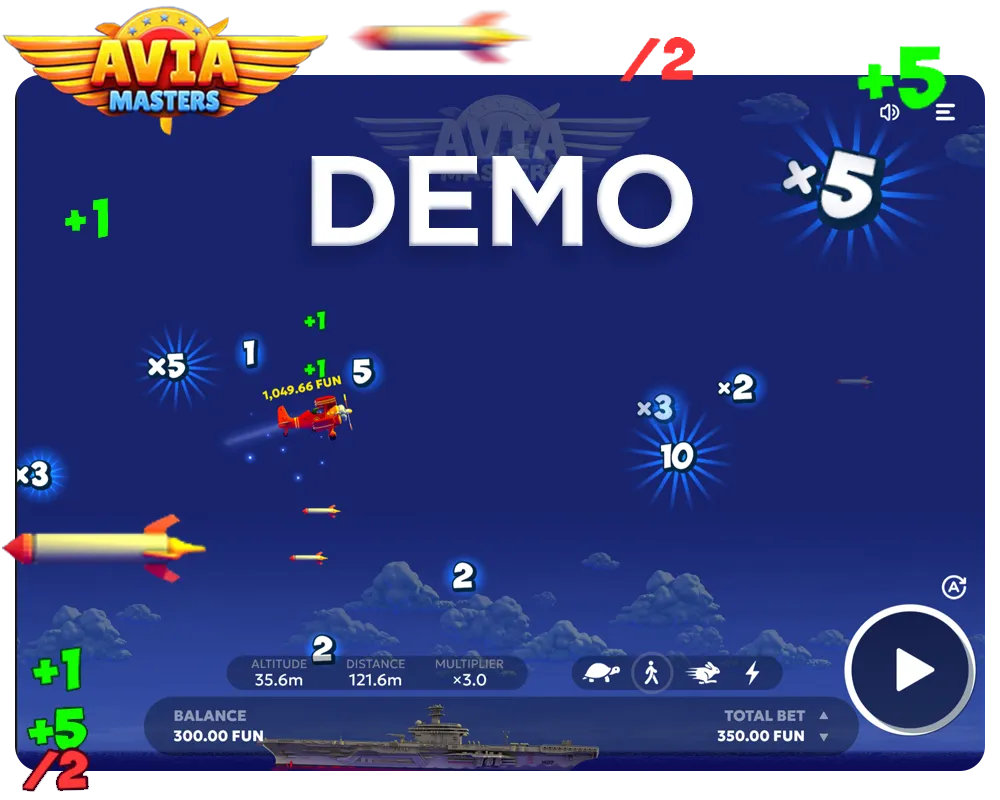
The demo mode is launched with virtual credits, real money bets are not made, and winnings are not withdrawn. You just play for fun or to study the game’s mechanics.
This provides a safe environment where you can learn the pace, understand the rocket effect, test your speed, and try auto-spin without risk. The demo is often available through licensed casinos, and registration is usually not required, but this depends on the site you choose.
Below are short instructions on how to launch the free version:
- Choose a licensed casino where fun-play mode is available.
- Find the game in the Crash section or through the search.
- Click Demo/Play for free and wait for it to load.
- Test the speed, autospin, and settings.
Avia Masters Game App
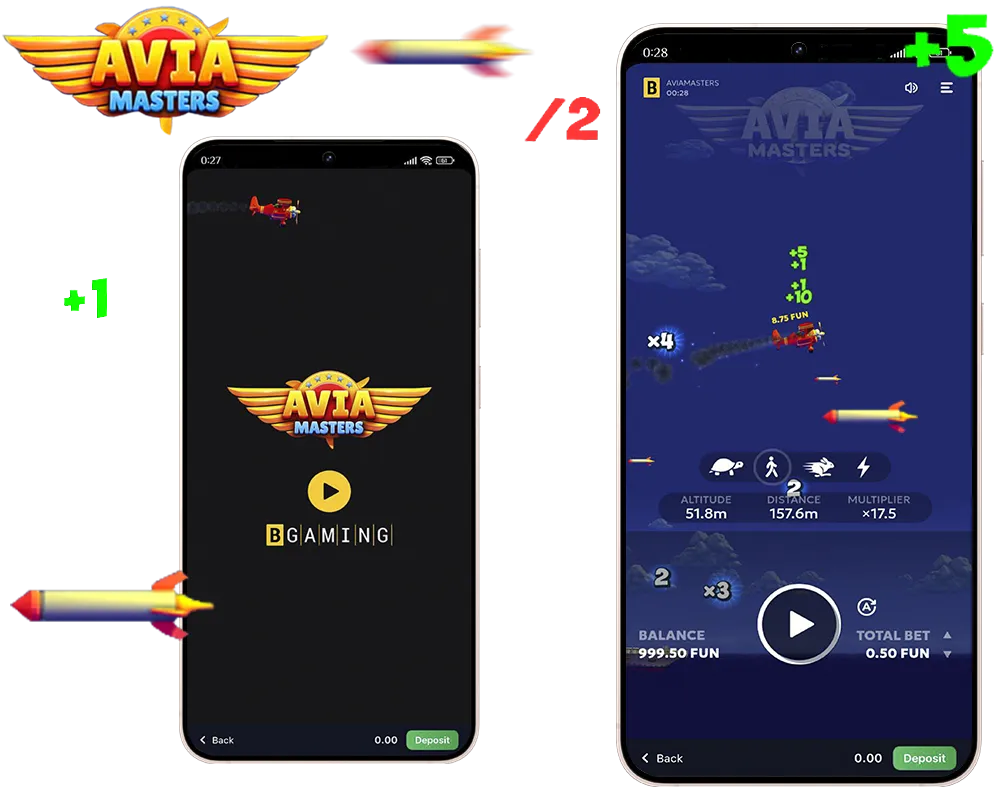
The Avia Masters ambling app is useful because it provides quick access and often works more stably than a browser. The application can be in the form of an APK on Android and a PWA on iOS. The system requirements are simple: Android 8.0+ or iOS 12.0+, about 100 MB of free space, and 2 GB of RAM.
Below is a basic download procedure that works for most sites and diminishes the risk of errors:
- Android: download the APK, enable installation from unknown sources during installation, install, and log in;
- iOS: open the website in Safari and create a PWA shortcut via “Share” for quick access.
How to Win in Aviamasters: Tips and Strategies
There is no strategy that “makes the outcome predictable.” The outcomes are random because the game runs on Provably Fair.
However, there are session management strategies. They do not promise profits, but they help keep the risk short-term. This is the most meaningful skill for crash games. If you don’t limit your pace and spending, you will lose not because of the game, but because of your habit of continuing to click. Here are some useful tips for newbies:
- Play the demo mode until you understand how the rocket cuts the multiplier and how often you “overcall” rounds;
- Keep your bet stable and don’t increase it after a series of losses;
- Play in a series of 10-20 rounds and take breaks so you don’t get into a rut;
- Only enable Autoplay with stop conditions for profit and loss;
- Choose a speed that allows you to make conscious decisions.
Conclusion
Avia Masters gambling game has a fast crash format where the player’s main task is to follow the plane’s flight. The game’s numbers are verifiable. If you play for money, it is advisable to build betting discipline, enable stop conditions, and take pauses for safe play. The mobile app is convenient, but you should only download the APK from the official casino site and check the requirements so you don’t encounter lag and errors at the moment.
FAQ
Is Avia Masters legit?
Yes, Avia Masters is completely legit. It is developed by BGaming, a well-known and trusted gaming company. The game uses a Provably Fair system, which means every round’s result is verified and cannot be altered, and you can check it yourself.
How Can I Play Avia Masters for Real Money?
First, choose a licensed casino you trust. Open an account there and make a deposit using the payment methods supported by that casino. Then, open the game in the casino library and launch the Avia Masters real money mode to play with your deposited funds.
How does the demo differ from playing for money?
The demo uses virtual credits and does not allow you to withdraw your winnings. The mechanics are the same as in the “paid” version. But the demo is well-suited for learning mechanics, autoplay, and your reactions to wins and losses.
What’s the point of speed if the outcome is random anyway?
The speed in Avia Masters doesn’t affect the result. However, you can pick the slowest speed to watch every element the plane collects and enjoy the process, or choose the fastest speed if you just want to focus on the results.